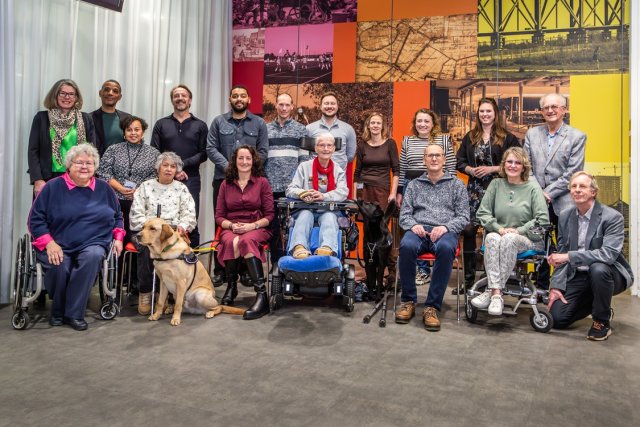
Zoetermeer introduces new accessibility approach
With the establishment of Team Accessibility Zoetermeer, the support of organizations through a subsidy scheme, and the systematic measurement of residents' experiences, the municipality of Zoetermeer is introducing a new approach to significantly improve physical accessibility. In the summer of 2025, the Zoetermeer City Council adopted the Physical Accessibility Manifesto.
Alderman for Physical Accessibility, Marijke van der Meer, emphasizes that the municipality does not want to wait for further national legislation to implement the UN Convention on the Rights of Persons with Disabilities: "Many measures that contribute to equal participation can already be implemented locally. With this combination of measures, we are opting for an approach that is unique in the Netherlands."
Zoetermeer Accessibility Team
To make the municipality of Zoetermeer more accessible step by step, each department works with designated accessibility contact persons. They ensure that knowledge about accessible building, working, and organizing is and remains available within their own department. Together, these contact persons form the new Zoetermeer Accessibility Team. The Accessibility Team works closely with the Council for Physical Accessibility in Zoetermeer. This council consists of experts who identify bottlenecks and possible solutions that can be addressed by the new Accessibility Team.
This team supports the organization with questions about accessibility and contributes ideas for improvements in its own field. Alderman Van der Meer is proud of the developments: "This collaboration is increasing expertise within the organization and making accessibility increasingly better and more self-evident in plans, designs, and implementations." The Accessibility Team translates the signals into structural solutions.
Accessibility Incentive Subsidy Scheme
The Impuls Toegankelijkheid grant program is aimed at organizations operating in Zoetermeer that provide services to residents, whether as visitors, customers, or employees. This program supports both structural modifications and improvements to outdoor spaces, as well as measures that enhance digital accessibility, such as making websites and apps accessible.
Council for Physical Accessibility
Erica Wouterloot, chair of the Council for Physical Accessibility, gives examples of bottlenecks experienced by residents and identified by the council: "These can relate to paving, obstacles, and blockages on footpaths and guide lines. By involving us in projects from the outset, we can provide immediate advice based on our own practical experience."
Monitoring
In a panel survey, questions were asked about themes that are central to the Physical Accessibility Manifesto. This survey is the starting point for tracking the improvements that residents will experience in the coming years in terms of paving, narrow sidewalks, and obstacles. The shortage of public and wheelchair-accessible toilets is widely perceived as a bottleneck, partly due to the limited awareness of existing facilities.
The municipal council receives a substantive progress report every year before the summer recess. The municipal website is expected to be set up for subsidy applications by April 1.